All Concerning Stained Concrete: A Comprehensive Guide to Its Benefits and Applications
Stained concrete has become a prominent choice for both domestic and industrial spaces. Its ability to incorporate visual appeal with usefulness makes it an interesting option. Numerous staining techniques provide a variety of shades and coatings, allowing for personalization. The advantages extend beyond appearance. Comprehending its applications and upkeep requirements is crucial for anybody considering this functional product. The nuances of stained concrete welcome additionally exploration.
What Is Stained Concrete?
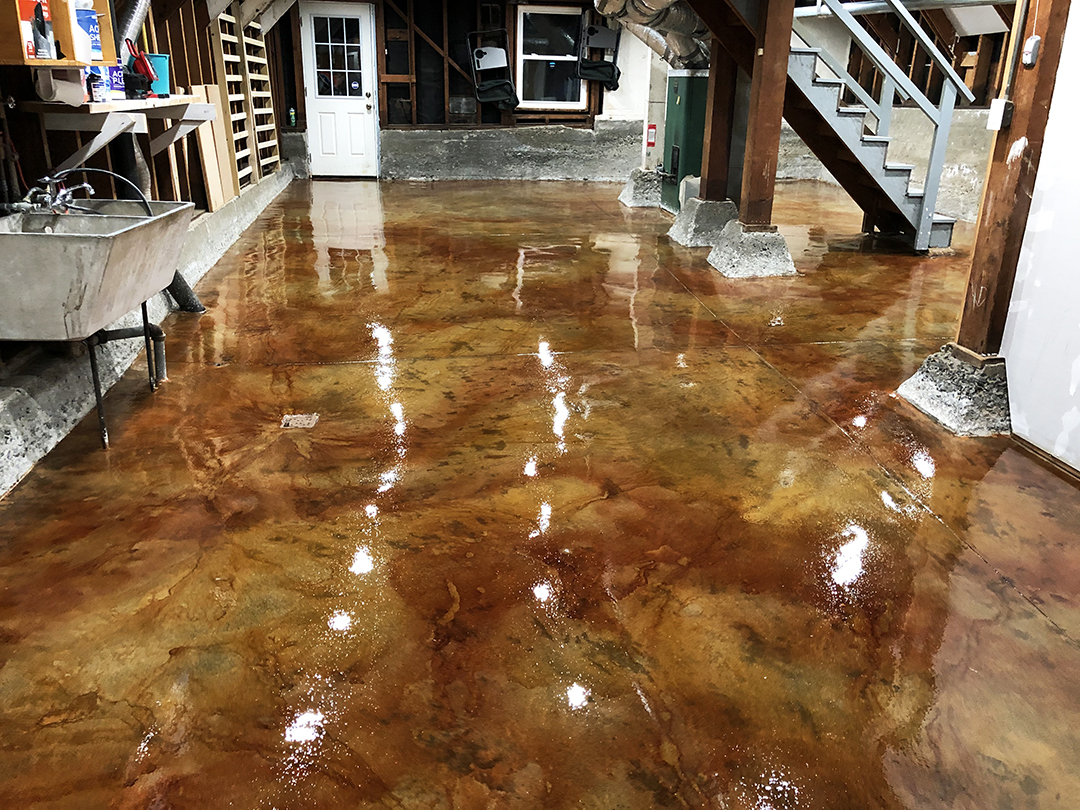
Discoloration can be applied to various surfaces, consisting of floorings, driveways, and patios, making it a functional option for both indoor and outside areas. The therapy can achieve a variety of appearances, from natural tones to vibrant, modern-day designs. Unlike paint, stained concrete preserves its appearance with time, as it becomes an essential component of the concrete itself. On the whole, stained concrete serves as an effective technique for changing ordinary concrete into aesthetically striking surface areas.
Advantages of Stained Concrete
Stained concrete offers substantial benefits, especially in aesthetic allure and sturdiness - local stained concrete. Its lively shades and unique patterns boost the aesthetic beauty of any area, making it a popular selection for both property and commercial applications. Furthermore, the long life of stained concrete guarantees that it remains a functional investment in time, withstanding damage
Aesthetic Allure
One of the most compelling benefits of using stained concrete is its impressive aesthetic appeal. Stained concrete offers an unique and flexible look that can complement numerous style styles, from modern to rustic. The mixture of dynamic shades and detailed patterns enables house owners and designers to produce customized surfaces that can enhance the general setting of a room. Unlike standard flooring choices, stained concrete can resemble the look of all-natural stone or sleek marble, supplying a high end appearance without the connected expenses. Furthermore, the shiny surface options can reflect light, further brightening interiors. This versatility makes stained concrete a favored selection for both residential and commercial applications, where visual impact is critical.
Resilience and Long life
The excellent visual top qualities of stained concrete are complemented by its impressive sturdiness and long life - stained concrete floors. Stained concrete surfaces are resistant to deterioration, making them suitable for high-traffic areas both indoors and outdoors. Their robust nature implies they can withstand severe weather, including extreme temperatures, rain, and UV exposure, without significant destruction. On top of that, stained concrete calls for minimal upkeep compared to other floor covering options, as it does not need constant sealing or refinishing. This long life not only decreases replacement prices however likewise contributes to a sustainable structure strategy. Generally, stained concrete gives a long-lasting solution that combines aesthetic appeal with useful advantages, guaranteeing its worth over time
Different Types of Staining Methods
Different discoloration techniques can markedly affect the visual top qualities of concrete surface areas. The 3 key methods include acid staining, which reacts chemically with the concrete, water-based staining, which provides a broader variety of colors, and overlay discoloration choices that offer a fresh surface. Each strategy has distinct features and applications that satisfy various layout preferences and job needs.
Acid Staining Approach
Exactly how can property owners change ordinary concrete surfaces right into aesthetically striking attributes? One effective approach is acid staining, a popular strategy that boosts the natural charm of concrete. This procedure involves applying a remedy of water, hydrochloric acid, and metallic salts to the concrete surface area. As the acid reacts with the lime existing in the concrete, it creates abundant, variegated shades that resemble marble or rock. Acid staining is understood for its durability and resistance to fading, making it a long-lasting selection for both interior and outdoor applications. It is necessary to note that the results can differ based on the original concrete color and structure. Proper application and securing are important for achieving the desired visual and longevity
Water-Based Discoloration Technique
A preferred option to acid staining, the water-based staining method uses house owners a flexible means to boost concrete surface areas. This method utilizes water-soluble dyes and pigments, allowing for a large range of colors and coatings. Unlike acid spots, water-based stains can be used to unsealed concrete and provide a less complicated cleaning process. The results can accomplish an extra consistent look and can be layered to produce distinct results. Additionally, water-based spots are typically much less toxic and give off less volatile natural compounds (VOCs), making them more eco-friendly. House owners may value the ability to customize their concrete surfaces with different tones, allowing for creative expression while preserving durability and durability in their flooring selections.
Overlay Discoloration Options
Numerous overlay discoloration alternatives exist for home owners aiming to invigorate their concrete surface areas. One prominent selection is acid discoloration, which reacts chemically with the concrete to produce rich, Bonuses variegated shades. Another option is water-based staining, supplying a broader shade scheme and less complicated application. Furthermore, concrete overlays can be incorporated with patterns for elaborate styles, boosting appearances. For a much more distinctive coating, homeowners might take into consideration making use of stamped overlays that mimic all-natural materials like stone or ceramic tile. Each strategy gives special advantages, from sturdiness to customization, permitting a personalized touch. Eventually, the option of overlay staining depends upon the preferred look and the problem of the existing concrete, making sure a rejuvenated and attractive surface.
Applications of Stained Concrete
Stained concrete deals a flexible service for numerous applications, boosting both visual appeal and functionality. This material is generally utilized in domestic, commercial, and industrial setups, making it a preferred selection among designers and developers. In homes, stained concrete can act as trendy flooring or outside patios, giving an innovative look while remaining resilient.
In commercial areas, such as stores and restaurants, stained concrete adds to a modern-day setting and can withstand heavy foot traffic. Furthermore, stained concrete is progressively used in public spaces like parks and pathways, where its ability to resemble natural stone or other products adds visual interest.
Stained concrete is perfect for pool decks and driveways, providing a slip-resistant surface that is simple to keep. Generally, the adaptability of stained concrete makes it suitable for countless settings, catering to diverse preferences and demands.
Upkeep and Look After Stained Concrete
Appropriate maintenance assures the longevity and charm of stained concrete surfaces. Regular cleaning is essential; making use of a light cleaning agent and water with a soft-bristle brush assists get rid of dirt and gunk without harming the surface. It is recommended to stay clear of severe chemicals that can remove away the stain or sealant.
Sealing stained concrete is essential for protection against wetness, stains, and put on. A high-quality sealant needs to be reapplied each to three years, depending upon the web traffic and exposure the surface area withstands. In addition, resolving spills immediately will stop discoloration and discoloration.
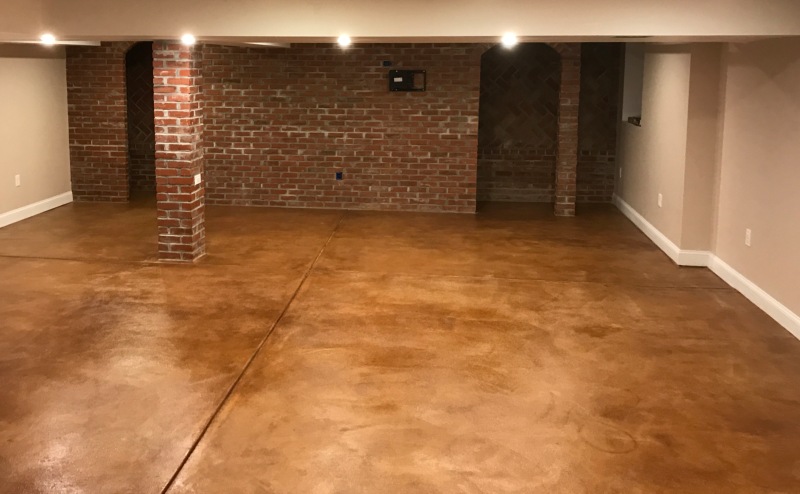
Expense Considerations for Stained Concrete Projects
When preparing a tarnished concrete job, budget plan considerations play an important function in identifying the overall expense. The expenditures related to stained concrete can vary significantly based on a number of aspects. The dimension of the location to be stained directly influences material and labor costs. Larger areas will naturally need more sources. Second, the type of stain picked-- acid-based or water-based-- can influence prices, with acid discolorations commonly being a lot more costly. Furthermore, the intricacy of the design, consisting of patterns or multiple colors, can increase labor prices. Preparation work, such as cleaning and grinding the concrete surface, contributes to the first costs also. Lastly, the option between DIY installment and employing an expert service provider will additionally impact the budget. Comprehending these factors enables property owners to make educated monetary choices about their stained concrete jobs, guaranteeing they accomplish the wanted visual within their monetary means.
Tips for Selecting the Right Stained Concrete for Your Room
Picking the appropriate stained concrete for a particular space entails cautious reflection of different elements past simply click site budget plan. One ought to assess the designated usage of the location. High-traffic areas may call for even more sturdy finishes, while attractive applications can focus on aesthetic appeals.
The color palette is an additional essential aspect; the selected shades ought to harmonize with existing decoration and lights. It's also vital to think about the surface area structure, as smooth finishes can improve elegance, while distinctive choices might assure security in damp areas.
Neighborhood environment and environmental conditions play a substantial function in the long life and upkeep of stained concrete, influencing the choice of sealers and surfaces.
Lastly, talking to experts can supply beneficial understandings tailored to certain needs, assuring the option of the perfect stained concrete that straightens with both performance and style.

Frequently Asked Concerns
Can Stained Concrete Be Applied Over Existing Flooring?
Stained concrete can indeed be applied over existing flooring, gave the surface area is stable and appropriately prepared. This approach permits a visual upgrade without the need for full removal of the initial floor covering materials.
The Length Of Time Does Stained Concrete Last?
Stained concrete can last for years when appropriately preserved. Elements such as traffic, environmental problems, and application methods significantly affect its long life, with numerous setups remaining dynamic and undamaged for 10 to three decades.
Is Stained Concrete Slippery When Damp?
Stained concrete can be unsafe when wet, as the coating might produce a smooth surface area. Using non-slip ingredients or distinctive coatings can minimize this issue, improving safety without compromising the aesthetic appeal of the concrete.
Can I Tarnish Concrete Myself, or Should I Employ an Expert?
The decision to stain concrete personally or work with a professional rest on skill degree and task complexity. While do it yourself staining can save money, specialists assure excellent results, particularly for elaborate layouts or large surfaces.
What Color styles Are Offered for Stained Concrete?
The selection of shades available for stained concrete consists of earthy tones like browns and tans, vivid tones such as reds and blues, and softer hues like pastels. This palette enables imaginative, individualized layout options.
Comments on “Step-by-step guide for maintaining stained concrete floors”